Complete UK BS 6820 Ring Sizing Standards & Engineering Precision
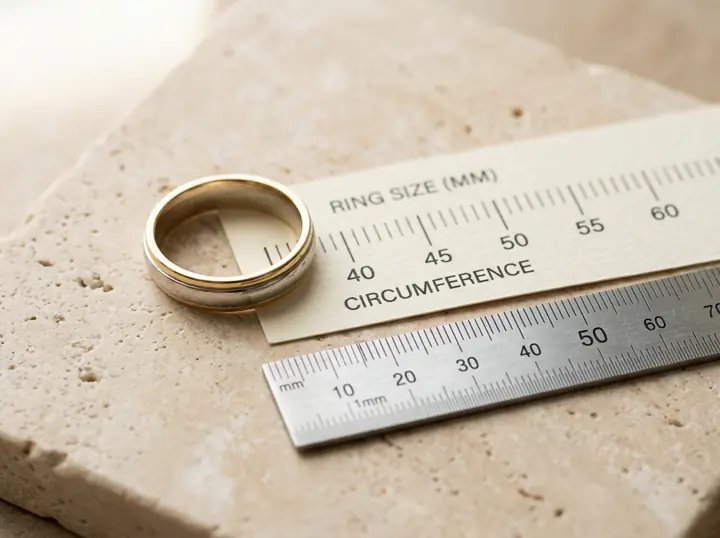
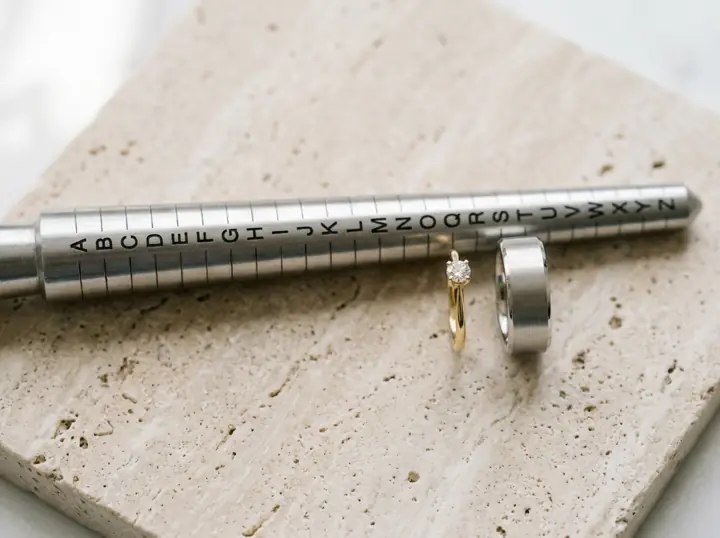
Unlike casual clothing letters, British ring sizes follow British Standard BS 6820 (alongside ISO 8653 metric circumference mapping). Beginning at UK Size A (37.8 mm), each whole letter step increases internal circumference by roughly 1.25 mm (which raises internal diameter by 0.398 mm via d = C ÷ π). Half sizes—written by UK high-street jewellers as J½, L½, M½, N½—split that step to 0.625 mm, providing sub-millimetre comfort tuning for engagement rings and wedding bands.
Avoiding Common Home Measurement Errors & Mandate Tolerances
Three physical variables explain nearly 90% of online ring returns in the United Kingdom: strip elasticity, band profile geometry, and diurnal finger temperature. Avoid string or sewing thread, as tension compresses skin under the loop and under-reads true size by one to two letters. Measure with a crisp 6 mm paper collar in the late afternoon around 20 °C, check both hands separately (your dominant hand is typically half a letter larger), and never measure immediately after cold weather or exercise.
Matching Profile Shapes: Court, D-Shape & Flat Pipe-Cut Bands
Traditional Court (Comfort-Fit) bands feature a gently domed interior surface that reduces skin contact area, allowing narrow-to-medium bands (2–4 mm) to fit true to your nominal BS 6820 chart size. Conversely, Flat / Pipe-Cut wedding bands of 6–8 mm grip the finger across their entire width and restrict knuckle passage; British bespoke jewellers routinely recommend ordering +0.5 UK size larger (adding ~0.65 mm circumference) for wide parallel profiles.
Need to convert any ruler, ring diameter, or decimal centimetre measurement into fractional inches? Return to our CM to Inches Converter.